Health and Safety Policy for a Removal Van Stockwell
 This health and safety policy sets out the standards expected during every stage of a removal van operation. Whether loading furniture, transporting boxes, or unloading items at their destination, the priority is to protect staff, customers, the public, and property from avoidable harm. A safe working environment depends on planning, awareness, and consistent use of sensible procedures.
The policy applies to all team members involved in removal van work, including drivers, loaders, supervisors, and any temporary staff. It also applies to subcontracted support where relevant. Everyone has a duty to take reasonable care, follow instructions, and report concerns promptly. No task is so urgent that it should be completed unsafely.
The company will assess risks before each job and adapt working methods where needed. This includes checking access routes, vehicle condition, weather conditions, lifting requirements, and the nature of the items being moved. Risk control is not optional; it is part of professional service delivery and helps reduce accidents, delays, and damage.
The main hazards associated with removal van services include manual handling injuries, slips and trips, vehicle movement, strains from awkward loads, and contact with sharp or unstable objects. Additional risks may arise from poor lighting, tight stairways, uneven surfaces, and fatigue during long jobs. Staff must stay alert to changing conditions and stop work if a situation becomes unsafe.
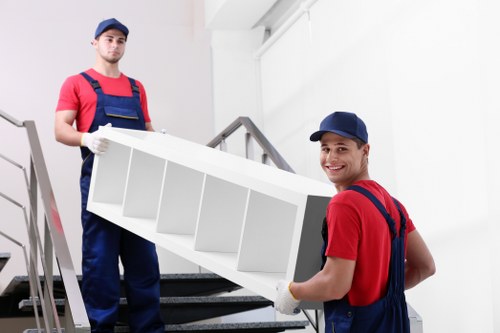
To manage these risks, all workers must use correct lifting techniques, wear suitable footwear, and keep walkways clear whenever possible. Heavy or bulky items should be moved by two or more people when necessary. Equipment such as dollies, straps, blankets, and ramps should be used properly and inspected before use. Safe handling is essential to protecting both people and goods.
 Before loading begins, the vehicle must be parked securely with the handbrake applied and, where needed, wheels chocked. Loads must be distributed evenly to prevent shifting during transit. Items should be stacked with care, with heavier items lower down and fragile items protected from pressure. Every load must be secured so that it cannot move unexpectedly while the vehicle is in motion.
Vehicle safety is a central part of this policy. Only authorised and trained drivers may operate the removal van, and they must hold the correct licence for the vehicle type. Drivers are expected to carry out daily checks covering tyres, mirrors, lights, brakes, fuel, and warning indicators. Any defect that could affect safety must be reported and resolved before the vehicle is used again.
Driving standards must remain professional at all times. Speed must be adjusted to road and weather conditions, mobile phone use must not distract the driver, and rest breaks should be taken to manage fatigue on longer journeys. Reversing should be carried out with a banksman or another suitable person where visibility is limited. Clear communication between driver and crew is vital when manoeuvring in confined areas.
The company also expects safe conduct when working in occupied homes, flats, offices, or storage areas. Floors should be protected where appropriate, doors secured, and entrances kept free from obstruction. Workers must respect the presence of children, pets, residents, and the public, and they should not smoke, eat, or behave in a way that creates additional risk or inconvenience.
 Manual handling controls will be supported by training and supervision. Staff should understand how to assess an item before lifting, recognising when a load is too heavy, too large, unstable, or awkward to grip. If an item has to be dismantled to make it safer to move, this should be done before lifting begins. Team members must ask for help whenever required rather than attempting unsafe solo lifts.
Protective clothing and equipment should be used according to the task. Gloves may help improve grip and protect against minor cuts, while hi-visibility clothing may be required where traffic or low-light conditions are present. In wet or icy conditions, extra care must be taken to reduce slip hazards. Good housekeeping on-site and inside the van helps prevent many common accidents.
Any spills, breakages, or contamination must be dealt with quickly and safely. If glass is broken or a load becomes unstable, the area should be made secure before work continues. Damaged packaging, debris, and straps should be removed promptly to avoid trip hazards. Where a substance presents a hygiene or environmental risk, it must be reported and handled in line with safe working procedures.
Emergency planning is also part of safe operation. In the event of an accident, injury, fire, vehicle breakdown, or incident involving the public, the crew must stop work, make the area safe if possible, and follow emergency procedures. First aid supplies should be available, and staff should know how to request assistance quickly. Serious incidents must be reported and recorded so that lessons can be learned.
Training will be provided to ensure that workers understand the hazards associated with van removals and the controls that reduce them. Refresher training may be given when equipment changes, procedures are updated, or incidents indicate that additional instruction is needed. Supervisors are responsible for monitoring compliance and correcting unsafe practice as soon as it is identified.
All employees are expected to take part in maintaining this policy by staying attentive, working cooperatively, and speaking up about hazards or near misses. A strong safety culture depends on honesty and accountability. Every job should be completed efficiently, carefully, and without unnecessary risk, because the best removal service is one that protects people as well as possessions.
 The policy will be reviewed regularly to ensure it remains effective and relevant to the way the removal van Stockwell operation is run. Reviews may follow accidents, changes in work practices, new equipment, or updated legal requirements. Improvements identified through inspection, observation, or reporting will be acted on without delay.
Responsibility for health and safety is shared, but leadership begins with management. Supervisors must set clear expectations, provide suitable resources, and ensure that unsafe behaviour is addressed. Workers, in turn, must cooperate with reasonable instructions and use the controls provided. This shared approach helps create a workplace where safety is routine rather than reactive.
 By following this policy, the removal van service can deliver reliable work while keeping risks under control. Safety, care, and professionalism should guide every lifting decision, every driving decision, and every interaction with customers and colleagues. That commitment supports better outcomes, fewer incidents, and a more trustworthy service overall.